It's not size that decides when the time is right
Whether you work with two systems or two hundred, you are on the same path: more and more systems, more and more connections, more and more decisions that someone once made — and that someone else will one day have to understand. The question is not whether there is a problem today. The question is when the process begins that sooner or later turns into one.
There is no such thing as “too early.” There is only “not started yet.”
If you already have established systems
We build on top — we don't replace
- × Your ERP, CRM and HR systems stay in place.
- × We don't bring in yet another document management system alongside the ones you already have.
- × We don't add yet another isolated AI module to the tools you already use.
We build on top of them so that your company regains what it gradually lost during digitalization: the interconnections of its own operations.
What a team learns the hard way over years while building a system and then outgrowing it — where, how and why an architecture grows too large — you will not have to learn again, painfully, with us. You don't have to outgrow a system yourself to know where it leads if you let it.
The goal is not a replacement. The goal is to add a missing layer.
If you don't have established systems yet
Built on it from the start
You don't need to build “traditional” systems first so that we can build on top of them later. Relational thinking can be built in from the very first line — one of our early partners, a manufacturing company, chose exactly this instead of a traditional manufacturing execution system.
Today you have two or three systems — in five years there will be a fourth, a fifth, a sixth, and each new one brings a new connection that someone has to understand and maintain. A large enterprise first has to painfully map decades of accumulated decisions before it can understand itself — you have nothing to map yet. It is enough to build in relational thinking while there are few systems and every decision is still fresh in memory.
More about this decision →In practice
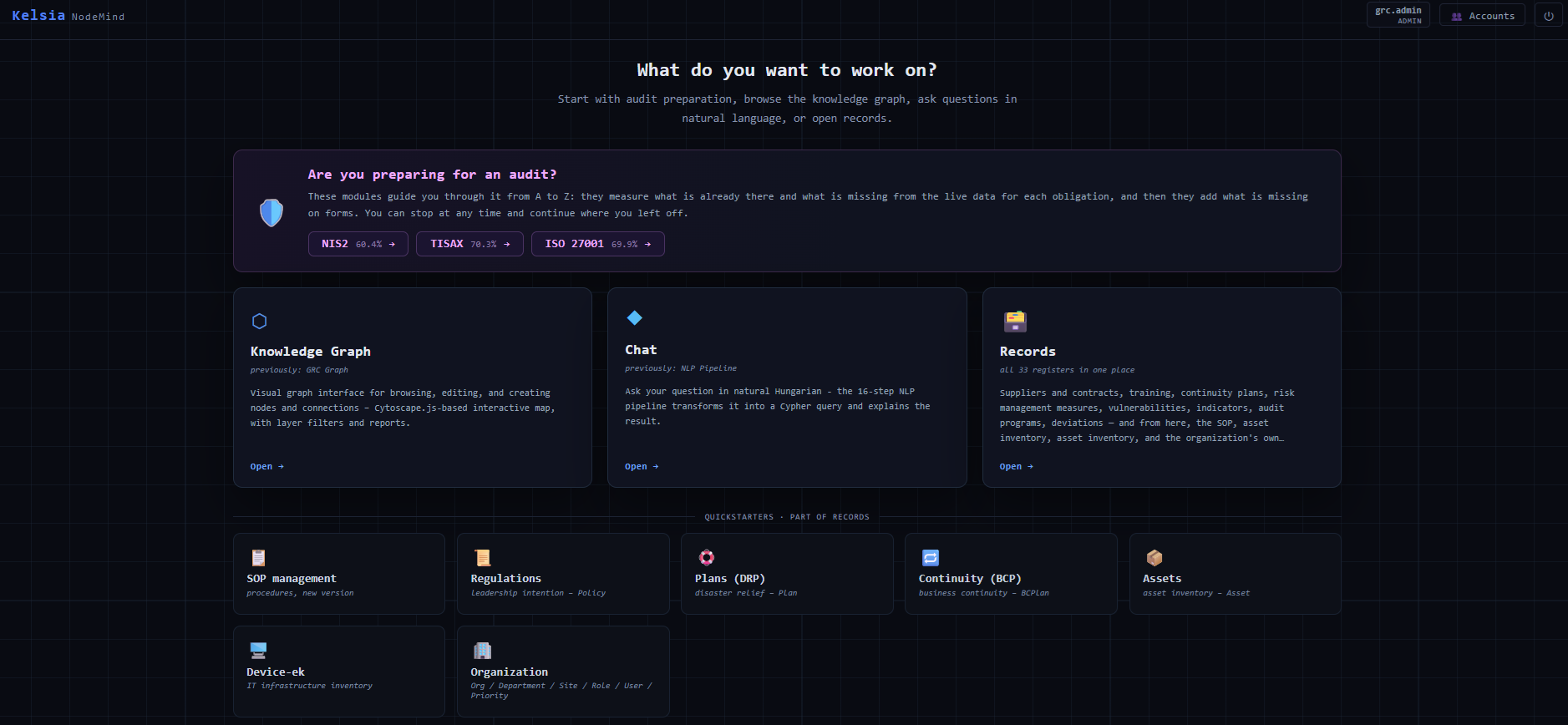
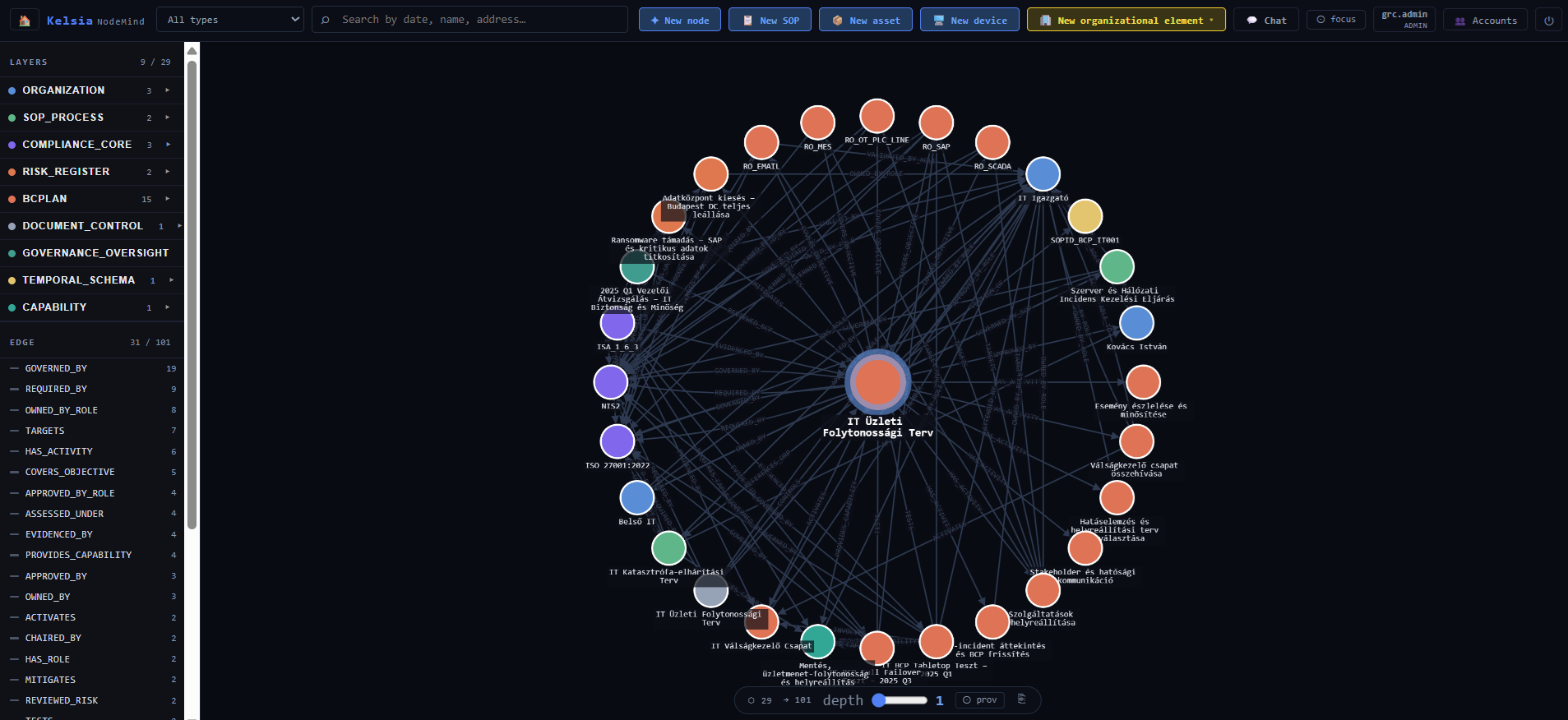
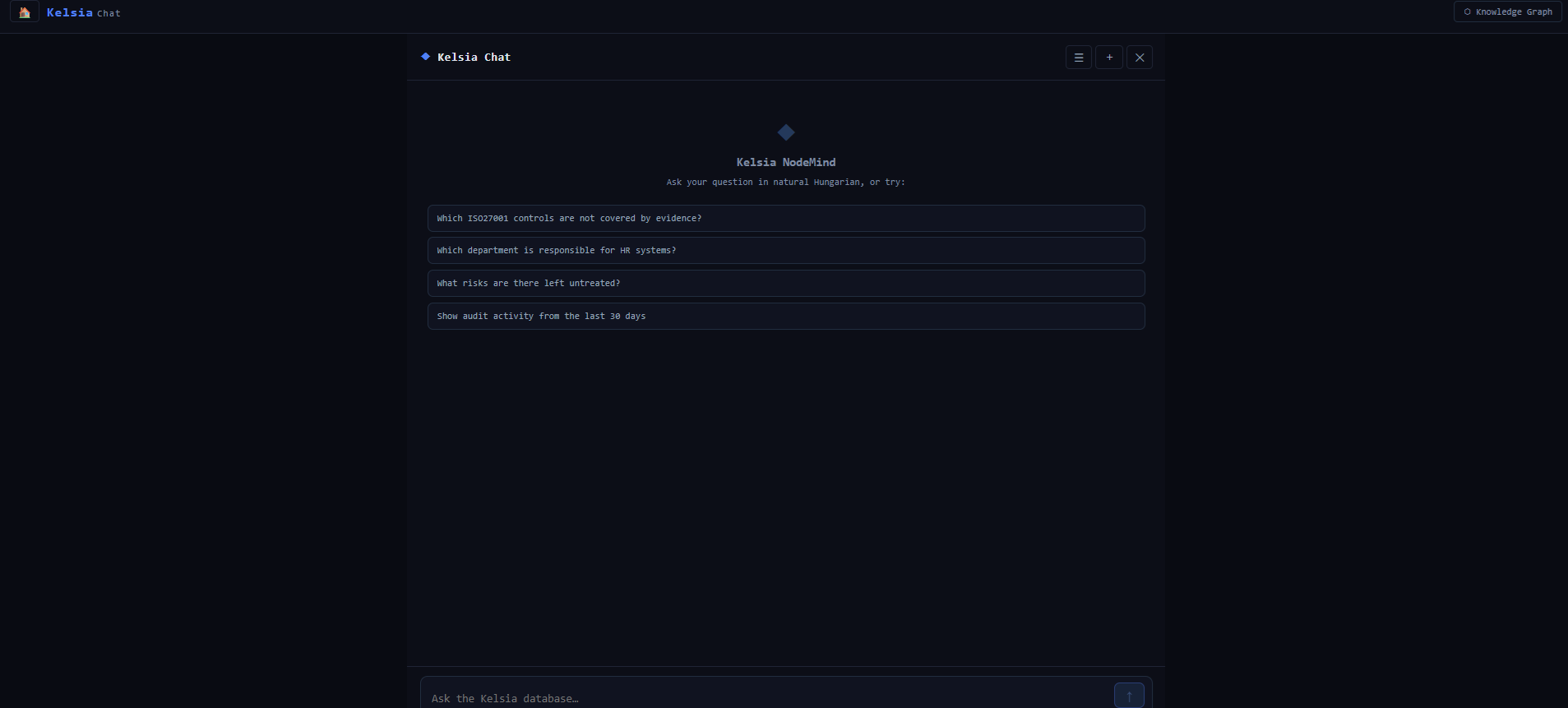
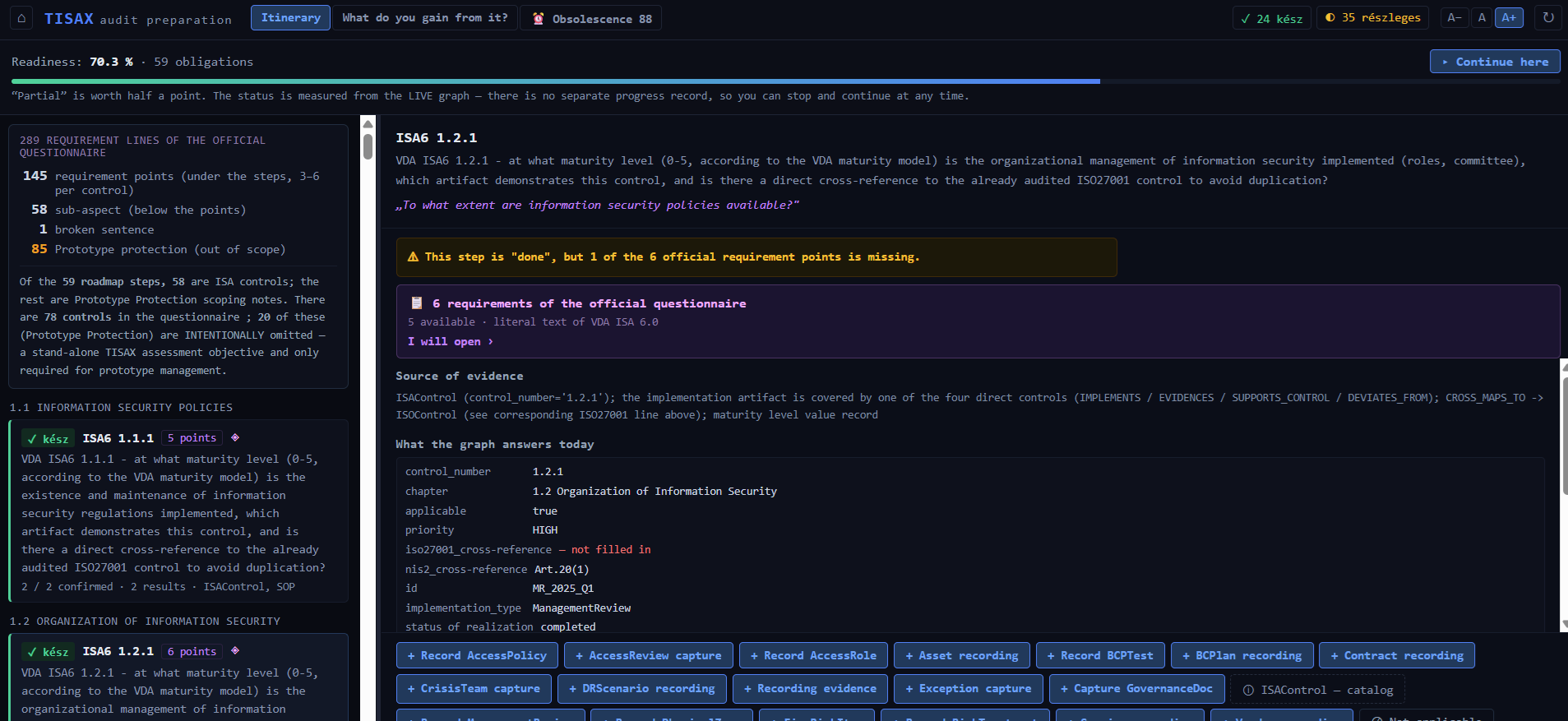
One question, and the answer's path through the connections
You ask in natural language, and Kelsia NodeMind shows you not only the answer but also the connections through which it arrived.
Data security
Your data stays under your control
Deployment to suit your needs
It can run in a cloud within the EU or on your company's own servers — in the latter case, the data never leaves the company.
Only the relevant data
During the pilot, we connect only to the systems and documents of the jointly selected area.
Individually designed integration
We design the integration of the data sources together with your IT team at the start of the pilot.
Frequently asked questions
Do we have to replace our existing systems?
No. Kelsia NodeMind sits on top of your existing systems; your ERP, CRM and other applications stay in place.
Which systems does it connect to?
We plan the integration with each partner individually at the start of the pilot, based on the systems and documents the company actually uses.
Where is our data stored?
In a cloud within the EU or on your company's own servers — the choice is yours.
How soon will we see the first results?
The first insights typically emerge within 6–8 weeks; the full pilot runs for 4–6 months.
What resources does it require from our company?
A designated contact person, access to the data of the selected area, and regular, brief feedback.
How much does it cost?
Early pilot partners participate at a fraction of the later price. We work out the specific arrangement during the consultation, tailored to your company's situation.
Where are the connections missing in your company today?
In a free, 45-minute online consultation, we will identify where the relational knowledge layer can deliver results fastest.
Request a consultation